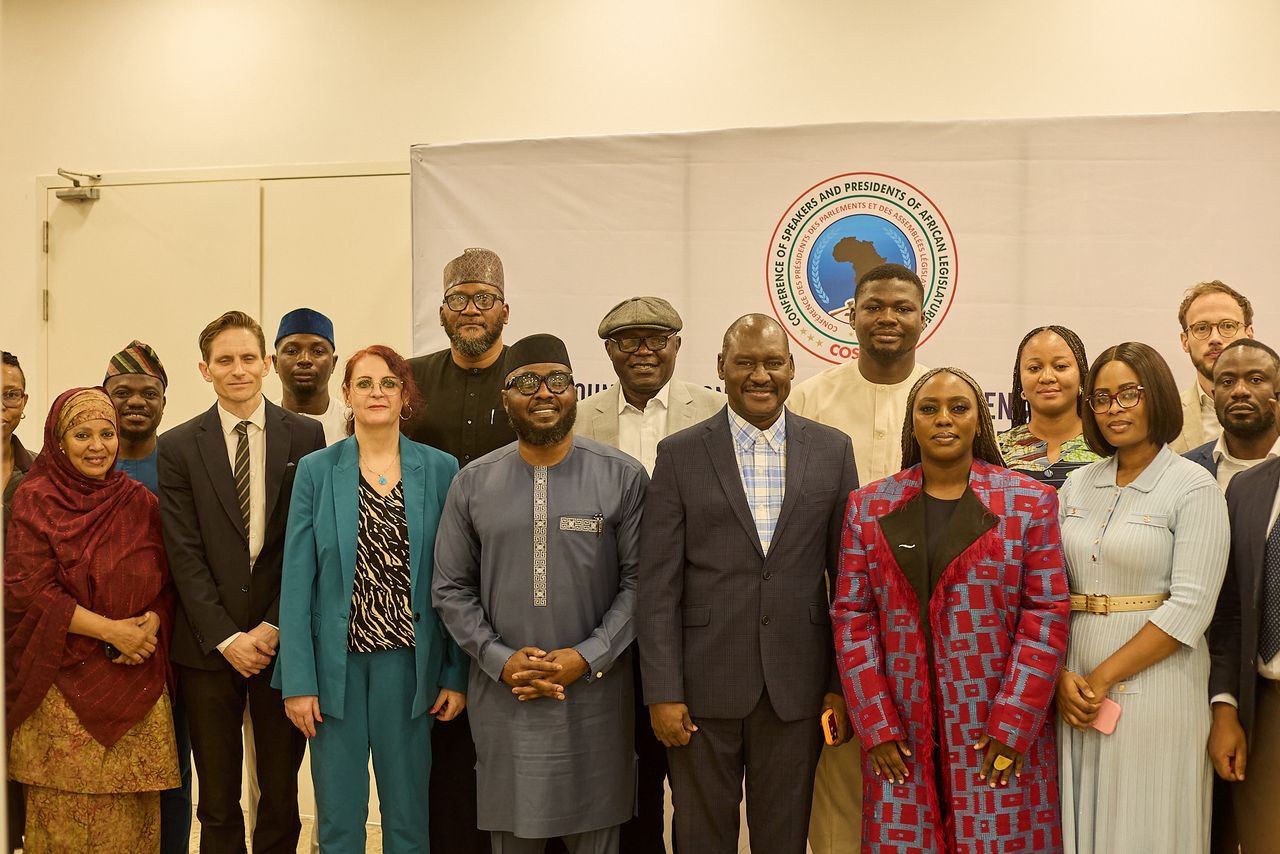
The Conference of Speakers and Presidents of African Legislatures (CoSPAL) convened a high-level Roundtable Dialogue on “Strengthening Evidence, Expertise and Exchange in Legislative Research and Knowledge Management” at its Secretariat in Abuja. The engagement brought together parliamentary research institutions, policy experts, think tanks, academics and development practitioners to examine practical pathways for strengthening legislative research ecosystems across Africa.
The Roundtable was organised in collaboration with the Otto Suhr Institute for Political Science and formed part of CoSPAL’s broader leadership agenda to institutionalise evidence-based decision-making within African legislatures.
In his welcome remarks, Amb. ‘Dapo Oyewole, the Secretary General of CoSPAL emphasised that modern legislative leadership must be anchored in rigorous research, strategic foresight and structured knowledge exchange. He noted that African parliaments are operating in an increasingly complex governance environment characterised by fiscal pressures, demographic shifts, digital disruption and climate and security challenges. Amb. Oyewole underscored the imperative of transforming research from a peripheral support function into a core pillar of legislative performance.
Setting the context of the Roundtable, Prof. Osei Anja of the Berlin-based Otto Suhr Institute for Political Science underscored the importance of strengthening the research–legislature interface across the continent. She observed that parliamentary research must be positioned not merely as technical support, but as institutional infrastructure essential to democratic resilience and long-term governance effectiveness.
Prof. Anja further highlighted the value of structured collaboration between African parliamentary institutions and global research centres, noting that comparative learning and knowledge exchange are critical to advancing innovation in legislative practice.
Participants identified several gaps affecting parliamentary research systems, including limited institutional capacity, weak research–policy linkages, need for -digitised archives and insufficient platforms for continental collaboration. At the same time, the Roundtable showcased emerging best practices from African and international contexts, demonstrating the transformative potential of structured research support for legislative leadership.
A key outcome of the engagement was broad consensus on the need to establish a coordinated continental framework for parliamentary research collaboration. In this regard, CoSPAL introduced the Africa Parliamentary Research & Knowledge Management Network (ARK-NET), a strategic initiative designed to connect parliamentary research centres, academic institutions, think tanks, and policy labs in a sustained community of practice. This Roundtable was a first phase, with the aim to develop a scalable model for replication across other regions of the continent.
Closing the session, representatives from diverse institutions present such as the National Assembly Library Trust Fund, Civil Society Legislative Advocacy Centre (CISLAC), National Assembly Budget and Research Office (NABRO), Office for Strategic Preparedness and Resilience (OSPRE), Policy Innovation Center (PIC), Nextier, National Assembly Directorate, Legis360, ElectHER, and others, reaffirmed their commitment to deepening partnerships that enhance legislative effectiveness, accountability and resilience.
The engagement marks a significant step towards positioning African legislatures as globally connected, innovation-driven and evidence-informed institutions. CoSPAL, the umbrella body of Speakers and President of Parliaments across Africa, committed to the establishment of ARK-NET which will be invaluable in strengthening legislative leadership and fostering parliamentary excellence in Africa.