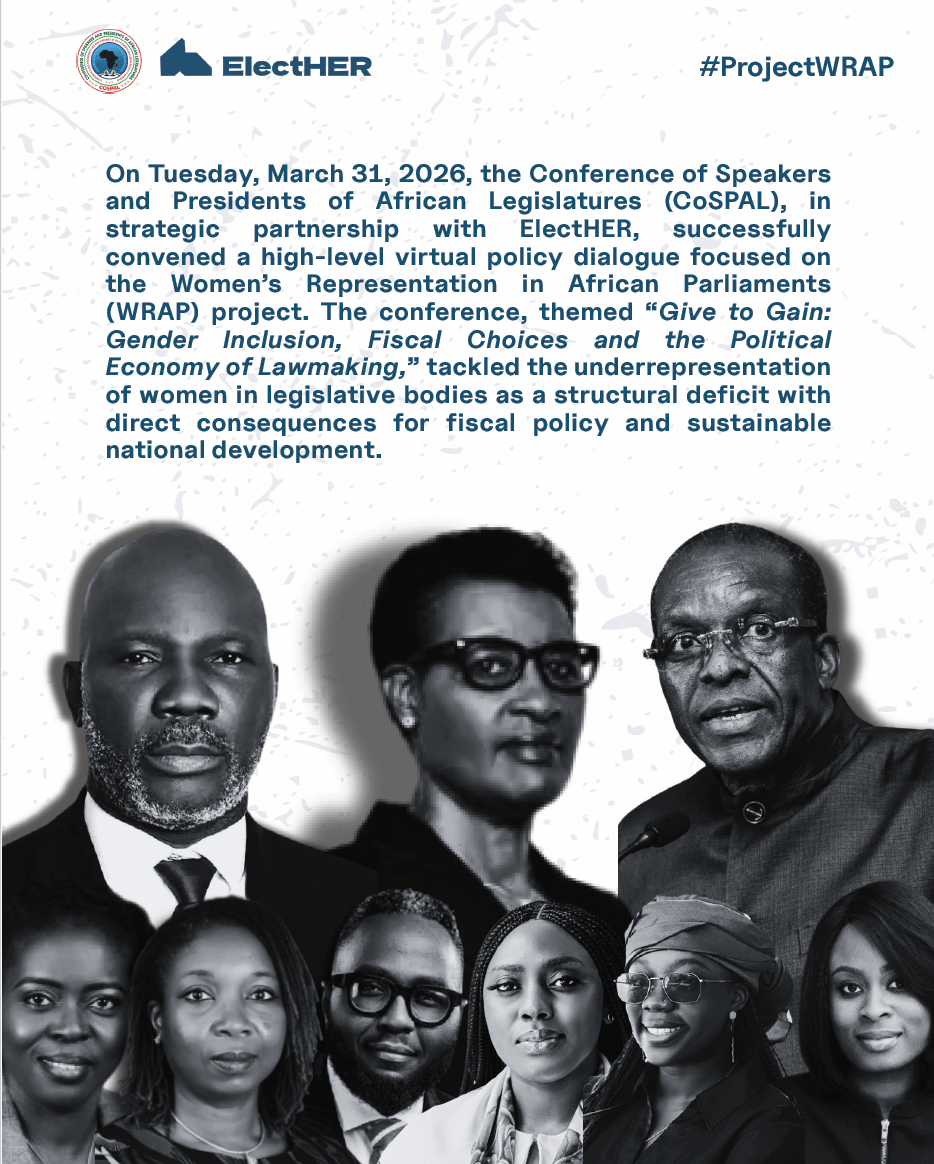
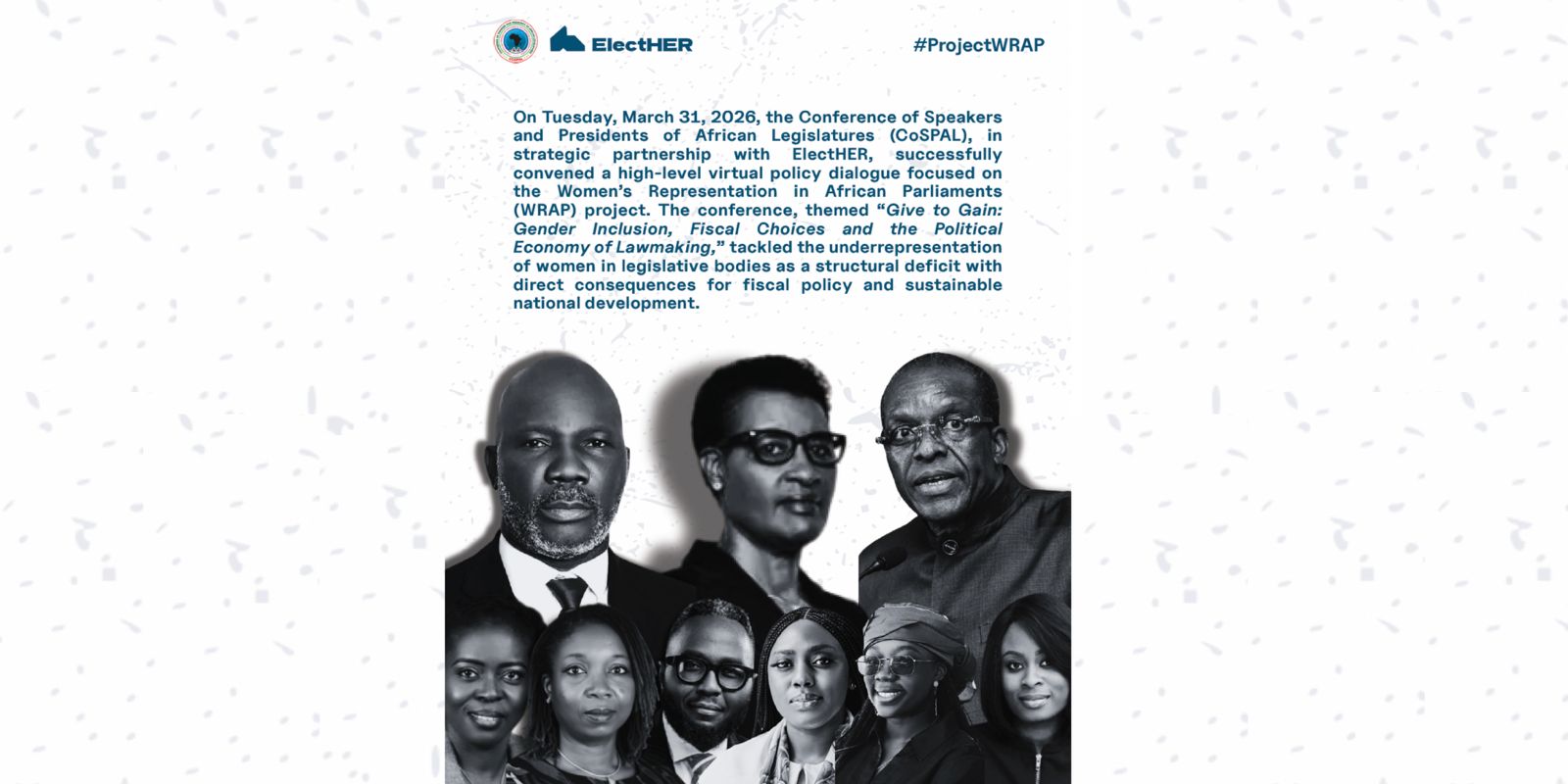
The Conference of Speakers and Presidents of African Legislatures (CoSPAL), in strategic partnership with ElectHER, successfully convened a high-level virtual policy dialogue on 31 March 2026, focused on Women’s Representation in African Parliaments (WRAP). Themed “Give to Gain: Gender Inclusion, Fiscal Choices and the Political Economy of Lawmaking,” the high-level conversation tackled one of the most pressing structural deficits in African governance — the chronic underrepresentation of women in the legislature and its direct consequences for fiscal policy, budget integrity and sustainable national development.
The event was headlined by Rt. Hon. Alban Sumana Kingsford Bagbin, Speaker of the Parliament of the Republic of Ghana and Chairman of CoSPAL, who delivered the keynote address. Also present was Rt. Hon. Richard Nagbe Koon,Speaker of the House of Representatives of Liberia and Rt. Hon. Donatile Mukabalisa, former Speaker of the Chamber of Deputies of the Republic of Rwanda, among other seasoned experts.
To ensure these discussions translate into measurable outcomes, Amb. ’Dapo Oyewole, Secretary General of CoSPAL, set the tone for the engagement with a clarion call for institutional responsibility and the imperative of moving beyond symbolic advocacy. “We cannot, in good conscience, claim to be strengthening legislative leadership if parliaments continue to marginalise more than half of the population that they represent. We need women not just at the table but also holding the gavel. The WRAP Project is our institutional response to that challenge and conversations such as this are how we translate institutional resolve into continental momentum.”
In his keynote address, CoSPAL Chairman and Speaker of Ghana’s Parliament, Rt. Hon. Alban Sumana Kingsford Bagbin, issued an unambiguous call to fellow legislative leaders across Africa to move decisively from rhetoric to institutional action on gender inclusion. “When women are excluded from fiscal policymaking, we are not merely perpetuating inequality, we are making inadequate economic decisions, designing imbalanced budgets, and limiting our collective growth. The theme of this conversation captures this logic with admirable precision. We must give to gain. The investment in gender inclusion yields returns that far exceed the political will required to make that investment,” he said.
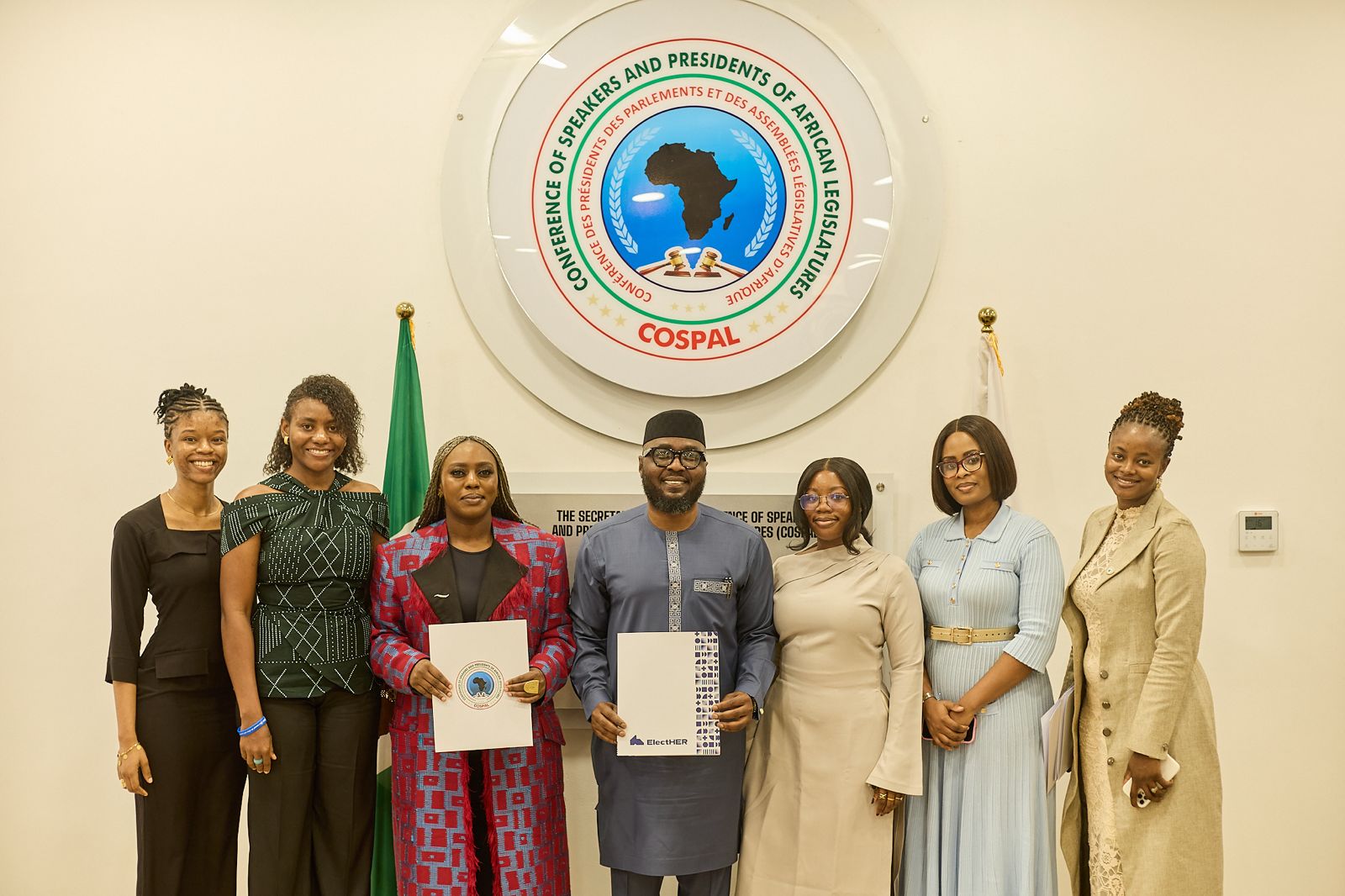
Rt. Hon. Bagbin commended the timely collaboration between CoSPAL and ElectHER under the leadership of Amb. ’Dapo Oyewole and Ms Ibijoke Faborode, in birthing the ‘Women’s Representation in African Parliament (WRAP)’ project, noting the extraordinary commitment of the CoSPAL Secretariat in advancing gender equity across Africa’s legislative institutions. He further called on parliaments to institutionalise gender-responsive budgeting, pursue deliberate electoral reform including affirmative measures and position the WRAP initiative as a continental model for legislative self-reform.
The dialogue featured an exchange of legislative strategies, including contributions from Rt. Hon. Richard Nagbe Koon, Speaker of the House of Representatives of Liberia. Looking ahead to the Liberian 2029 elections, Rt. Hon. Koon outlined legislative proposals to improve greater women’s participation, including cross-parliamentary peer learning missions to Rwanda and Uganda. He acknowledged the constitutional and judicial sensitivities involved and called on CoSPAL member parliaments to share experiences and solutions. “When it comes to the budget, we have started institutionalising gender inclusion — specifically when you scrutinise our lines for health and education, you will discover that we are trying our utmost best. But the issue of women being fully and physically present among the membership of our legislature has been very difficult for us. It is a difficult thing, but it is achievable — and we need more consultation between our African brothers and sisters”, he said.
In the course of the conversation, the CoSPAL Secretary General, Amb. Dapo Oyewole announced that the WRAP initiative would introduce an evidence-based ranking of African parliaments’ performance on women’s representation, to be released and announced publicly at each CoSPAL General Assembly. It will be a mechanism designed to foster healthy competition and accountability among legislative institutions across the continent.
Ms. Ibijoke Faborode, Chief Executive Officer of ElectHER, who co-leads the WRAP project, provided the technical framing for the day’s dialogue, situating the WRAP project within a wider agenda of legislative transformation. “WRAP is designed as a continental platform to strengthen inclusive parliamentary leadership through data, policy engagement, and cross-country,’’
Participants heard from the former Speaker of Rwanda’s Chamber of Deputies, Rt. Hon. Donatille Mukabalisa, whose account of Rwanda’s trajectory, from constitutional frameworks to 63.7% female representation in its Chamber of Deputies was widely cited as a model for replication across the continent. “No country can pretend to achieve sustainable development or economic growth if it is leaving behind more than half of its population. Political will is everything. You can put in place laws, you can put in place policies, you can put in place whatever you want, but if they are not implemented because of a lack of political will, you will not succeed. Gender equality and women’s empowerment must be everyone’s business, not only women’s business. It has to be considered a pillar for sustainable development.”
While addressing the stakeholders, Dr Yinka Babalola, Country Director for Nigeria at the International Budget Partnership (IBP), provided expert analysis, drawing on her frontline experience at the intersection of budget transparency, legislative oversight and gender accountability “When women are structurally excluded from Parliament, we lose not just half the citizenry from the chamber — we also lose the fiscal intelligence they bring, their lived experience and their policy instincts to allocate public resources effectively,” she said.
The session was facilitated by Dr. Osasuyi Dirisu, Executive Director of the Policy Innovation Centre (PIC), who said that “Gender inclusion must be approached not as a standalone agenda, but as part of a core fiscal governance architecture. It must be embedded within the systems through which decisions are made — the budget processes, the committee structures within parliaments, and inter-branch coordination mechanisms. Getting women elected is only half the work. The more important question is whether institutions are genuinely prepared to support women to lead once they arrive. This is precisely where the WRAP Project is positioned to contribute.”
KEY OUTCOMES AND COMMITMENTS
The WRAP Policy Conversation produced a series of clear calls to action for African parliaments, including:
- The institutionalisation of gender-responsive budgeting as a standard instrument of parliamentary oversight across African legislatures.
- The pursuit of deliberate electoral reforms, including affirmative measures and reserved legislative seats, to accelerate women’s representation.
- The positioning of the WRAP initiative as a continental model for evidence-based, parliament-led gender reform, underpinned by cross-country learning.
The virtual dialogue concluded with a good commitment from the participating Speakers and legislative leaders to transition these high-level insights into domestic legislative agendas. As CoSPAL and ElectHER prepare for the next phase of the WRAP Project, the focus shifts to the development of the continental ranking mechanism and the commencement of bilateral peer-learning missions between parliaments.
By centering gender inclusion within the political economy of lawmaking, Africa’s legislatures are not merely fulfilling a moral imperative; they are securing the fiscal and structural integrity of the continent’s future.
About CoSPAL
The Conference of Speakers and Presidents of African Legislatures (CoSPAL) is an indigenous pan-African inter-parliamentary institution that fosters collaboration, cooperation and coordination amongst legislative leaders across the continent
About ElectHER
ElectHER is a Pan-African organisation catalysing women’s inclusion in social, economic, and public life across the continent. Our work is anchored in the recognition that gender equity is fundamental to Africa’s socio-economic transformation, democratic resilience, and long-term stability.
For further inquiries, kindly contact info@cospal-africa.org or communications@electher.org.